The short answer: it has the power to do both. The results will be determined depending on the amount of intention, effort, and creativity of the teacher when designing assignments and projects.
GenAI is not going away, so teachers do themselves and their students a disservice if they are in denial of its significance and choose to take a shut-it-down, zero-tolerance policy of using GenAI. Teachers may shy away from promoting using this new technology because of fear, ignorance, or simply uninspired inertia (“teachers teach they way they were taught,” as Rich says). They may even use it themselves but still feel worried about permitting students to use it.

There are a few keys to effectively using GenAI in the classroom. These tenets include setting clear boundaries and expectations around GenAI use, having frequent discussions and debates about GenAI, and using GenAI in balance with other tools and pedagogies.
Like Rich has done with this class, it is wise to have a GenAI policy set up at the beginning of the year, especially for grades 4 or so and up. For older grades, it may be something that can be created as a class at the beginning of the year.
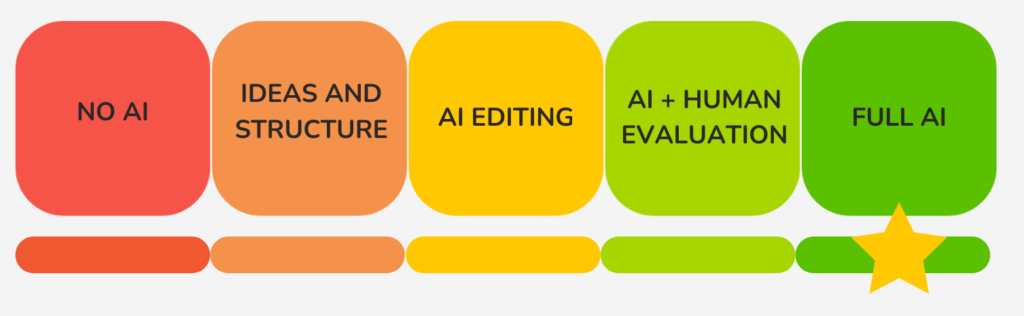
Throughout the year, consider bringing in news articles about new innovations in GenAI. Consider environmental and ethical implications and explicitly teach about GenAI’s biases. Discuss why it is still important to learn writing, even if AI can generate it quickly (e.g., writing good prompts and critically analyzing answers are still necessary human skills to produce quality GenAI writing). Consider teaching how to edit AI writing to make it less wordy (which it often is).
Teachers can also create assignments that have specific GenAI-created aspects to them and can then ask for proof of the chat exchange in an appendix to the assignment. Consider showing how GenAI can be used creatively, like a collaborator or assistant, and have students learn how they are still the creative directors of the project.
Bringing balance to this tool means ensuring that students are limiting their screen time and that they understand WHY they are being instructed to limit their screen time. Consider asking GenAI to help you structure a writing assignment that is less susceptible to GenAI creation. Or consider assigning pen and paper aspects of writing assignments, such as mind maps or sketchnotes.
Maybe GenAI will make some assignments seem futile—because they are. Here’s where some of the effort and creativity of the teacher comes in. For example, you could make handwriting fun and meaningful again by providing students with an opportunity to write letters to pen pals across the world. After doing something hands-on like this, students might understand the beauty of a handwritten letter and then have a felt experience of learning objectives, like how spelling and improvised writing from the heart can have value.
Whether we like it or not, there’s a time and a place to use GenAI, and as educators it is our responsibility to continue deepening our understanding of when and where that is.